Convergence Solutions
Customized incident management references built for real-world response.
- Transform incident management references into intuitive, operational tools
- Built around your workflows, terminology, and regulatory environment
- Enhance existing systems rather than replacing them
About Us
Convergence Solutions LLC designs and delivers customized mobile and desktop applications that transform incident management references into intuitive, operational tools. Built around your workflows, terminology, and regulatory environment, these applications make critical guidance accessible, searchable, and usable under pressure.
Rather than replacing your existing systems, our solution enhances them. Our goal is to enable your teams to efficiently update and share official incident documentation and collaboratively develop Incident Action Plans in real time. The focus is simple: reduce friction, improve clarity, and support coordinated decision-making when it matters most.
Our Vision
Incident management doctrine should be immediately usable, not buried in static documents. We envision a future where every response team has purpose-built tools that make critical guidance accessible the moment it matters.
Our Mission
To build operational technology that reduces friction, improves clarity, and supports coordinated decision-making during incidents. We work directly with practitioners to turn the way teams actually operate into the software they use.
Core Competencies
How we turn incident management doctrine into tools that work under pressure.
Custom Reference Platforms
Mobile and desktop applications that turn incident management handbooks into searchable, operational tools.
Incident Action Plan Tools
Collaborative platforms for developing, updating, and sharing IAPs in real time across command and field staff.
Workflow Integration
Built around your operational workflows, terminology, and decision-making cycles, not generic templates.
Documentation Management
Efficiently update and share official incident documentation so your teams always work from the latest version.
Field-Ready Design
Interfaces that work under pressure, delivering the right content at the right moment for responders on the ground.
Regulatory Alignment
Platforms configured to your regulatory environment, ensuring compliance while improving operational clarity.
Featured App · Now on iOS & Android
Incident Handbook Pro
Field Edition
Our flagship reference platform: a field-ready ICS companion that helps responders run the operational period, work their job aids, and fill the ICS 201 and 214 when it matters most.
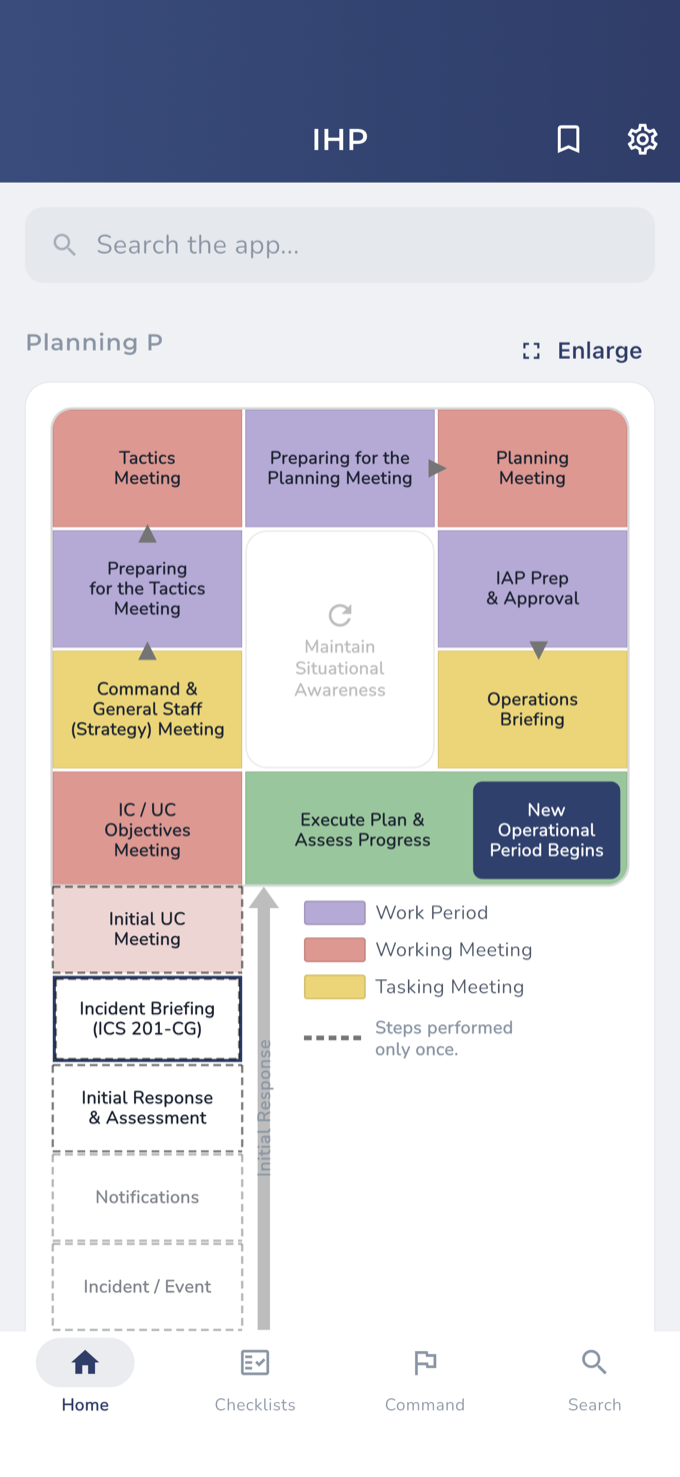
- Run the operational period with an interactive Planning P
- Job-aid checklists and command direction for every ICS role
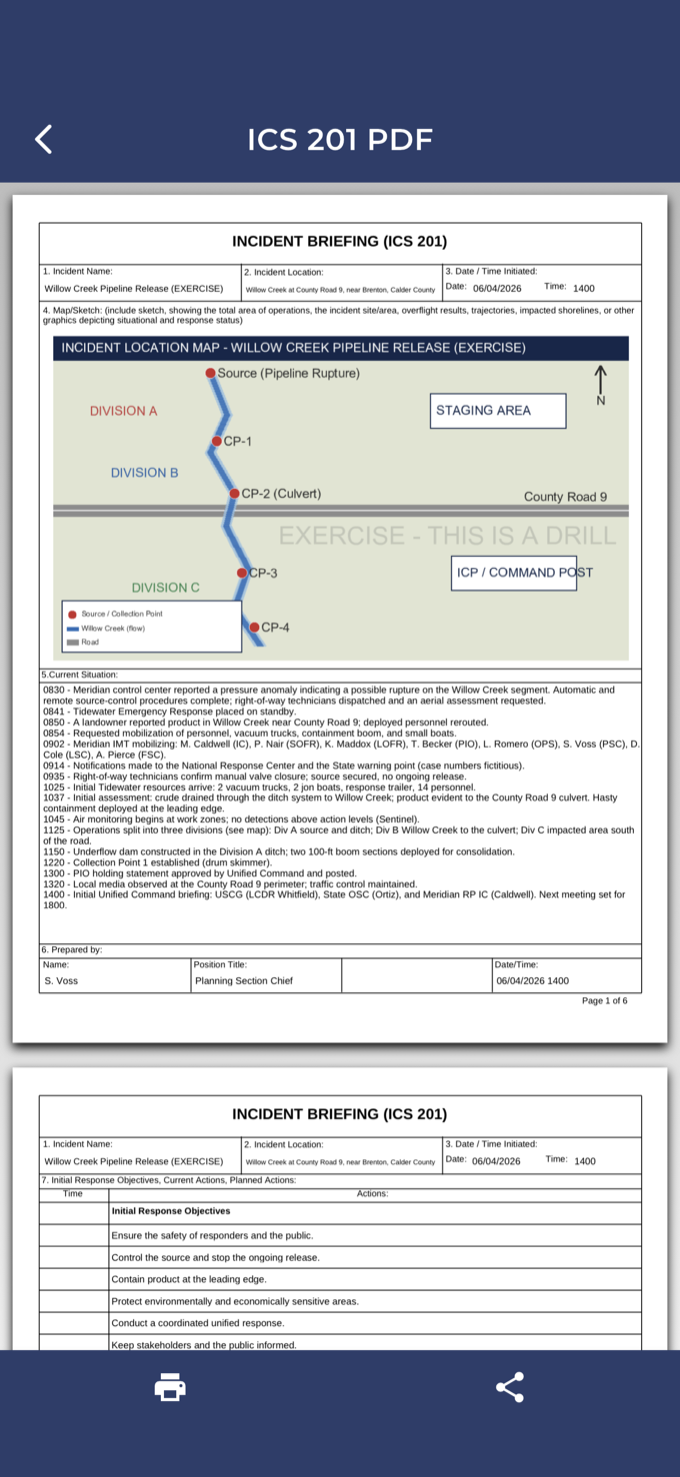
- Fill the ICS 201 and 214 and export a ready-to-share PDF
Principal
Expertise

Lushan Hannah is a former U.S. Coast Guard Captain with over 26 years of experience leading complex incident response, emergency management, and business continuity operations across government and industry. As Founder of Convergence Solutions, he advises energy and critical infrastructure organizations on crisis management, operational resilience, and incident command performance.
Certifications
Affiliations


Education
Frequently Asked Questions
Common questions about our enterprise incident management solutions.
What security measures are built into your platform?
Security is designed into the architecture from the start, not added later. The core platform can operate as an offline-first application, meaning no external network connections, APIs, or data transmission, which significantly reduces exposure to cyber threats.
For enterprise deployments, the system can be hosted on your organization's internal servers or private cloud (e.g., AWS, Azure), ensuring full control over your data. As collaborative and cloud-enabled features are introduced, they are designed with secure authentication, role-based access controls, and audit tracking from the outset.
We also maintain a disciplined development approach, combining manual code review with security-focused testing to identify and mitigate vulnerabilities before deployment.
In offline deployments, the platform has zero network attack surface. There are no API endpoints, no data transmission, and no user accounts required. Data is stored locally with AES-256 encryption support. This architecture eliminates network-based threat vectors by design.
Can multiple users collaborate in real time to build an IAP?
This is a planned capability. The platform is being designed as a collaborative, multi-user environment where teams can work concurrently on ICS forms and IAP components. This will include:
- Real-time collaboration on forms (e.g., ICS 201, 214, etc.)
- Shared incident workspaces
- Automatic version tracking and audit history
- Structured workflows aligned to the Planning P
The goal is to allow an entire incident management team to build and refine an IAP simultaneously, rather than passing documents back and forth.
Can user access be restricted by role or by incident?
Role-based access controls and incident-level permissions are on the roadmap for the enterprise version. This will include:
- Users assigned roles (e.g., Planning Section, Operations, Command)
- Access restricted to specific incidents or workspaces
- Sensitive information only visible to authorized personnel
- Permissions controlling who can view, edit, approve, or export documents
Each incident will operate as a contained workspace, ensuring separation between events and maintaining operational security.
Does my organization need its own incident management handbook or forms?
No. We can use any version of handbook or forms to suit your needs. If you have your own documents, we can:
- Digitize your existing handbook and forms for alignment with your SOPs
- Provide a structured baseline using established frameworks (e.g., ICS/IMH) and tailor it to your organization
The platform is built to reflect how your organization actually operates, including your terminology, workflows, and regulatory environment. If you don't have a formalized handbook, we can help structure one as part of the implementation.
How long does it take to design and deploy a customized solution?
Timelines depend on the level of customization, but most projects follow a phased approach:
- Initial prototype / demo: 1-2 weeks
- Customized platform build: 3-6 weeks
- Testing and refinement: 1-2 weeks
Because the platform is built on a modular architecture with a reusable data model, development timelines are significantly faster than traditional custom software builds. Our automated extraction pipeline uses AI-powered document analysis to convert source PDFs into structured, searchable data. A 380-page handbook processes in hours through the pipeline. Manual digitization of the same document with its tables, org charts, and cross-references would take weeks. This is why a working prototype can be ready in 1-2 weeks.
How much does a customized enterprise solution cost?
Pricing depends on scope. Most projects fall into two categories:
Custom Build (one-time)
- Custom configuration
- Data integration (handbooks, forms, workflows)
- Deployment and initial support
Enterprise Deployment (optional ongoing)
- Hosting (cloud or on-prem)
- Collaboration features
- Ongoing updates and support
- Training and exercise support
We also offer flexible models including one-time licensing, annual enterprise licensing, and hybrid (platform license + customization). The goal is to provide a solution that scales with your organization without locking you into unnecessary overhead.
How is this different from other incident management software?
This platform is not a replacement for a full common operating picture or resource tracking system. Instead, it focuses on:
- Digitizing your incident management doctrine
- Making handbooks, roles, and processes instantly accessible
- Enabling faster, more accurate IAP development
It complements larger platforms by strengthening the planning and documentation layer, where many incidents break down.
Under the hood, your content is stored as structured, linked data in a relational database, not as static pages. Every role, meeting, acronym, and cross-reference is indexed and connected. This is what enables instant full-text search, tappable cross-references, and interactive org charts. The same architectural approach is used by medical reference platforms and legal research tools. We apply it to incident management.
What happens when our handbook is updated?
The same extraction pipeline that digitized your original handbook processes the new edition. Updates are delivered in days, not months. The pipeline handles the structural analysis, cross-reference linking, and search indexing automatically.
User data such as bookmarks, form drafts, and preferences is stored separately and is unaffected by content updates.
Work with Us
Tell us what your team needs to be ready for.
Whether you need a mobile field guide, a searchable reference tool, or a platform for collaborative Incident Action Plans, we'll scope an approach that fits your operations.